Wide-leg jeans keep their shape when the waist is secure, the fabric falls rather than collapses, and the hem is adjusted for the shoe. We solve those three points before adding a jacket or bag.
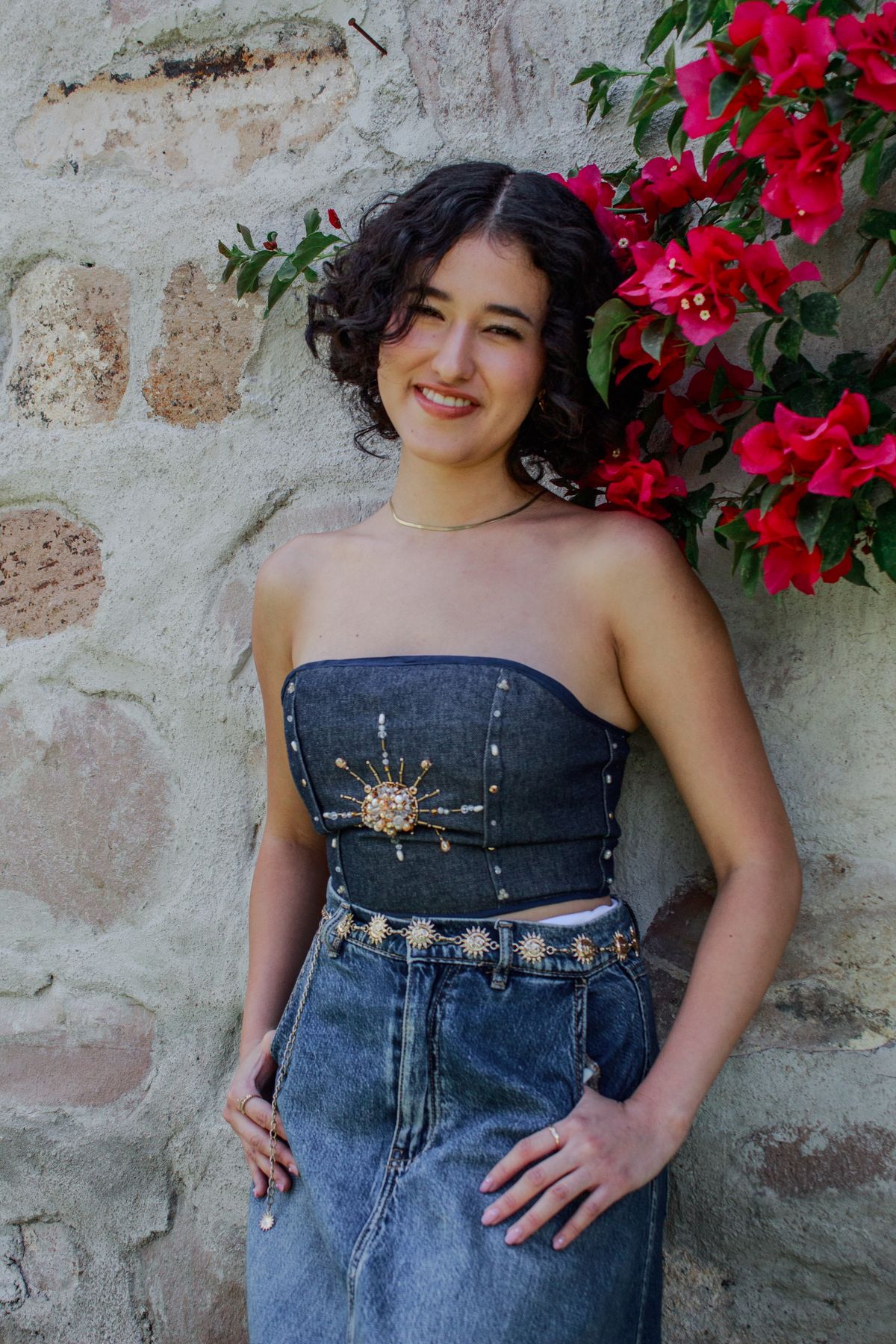
Give the volume a visible starting point
A tucked T-shirt, fitted knit, cropped jacket, or shirt ending near the waistband makes the leg shape readable. An oversized top can still work when it is open over a closer base or has enough structure to avoid collapsing into the jeans.
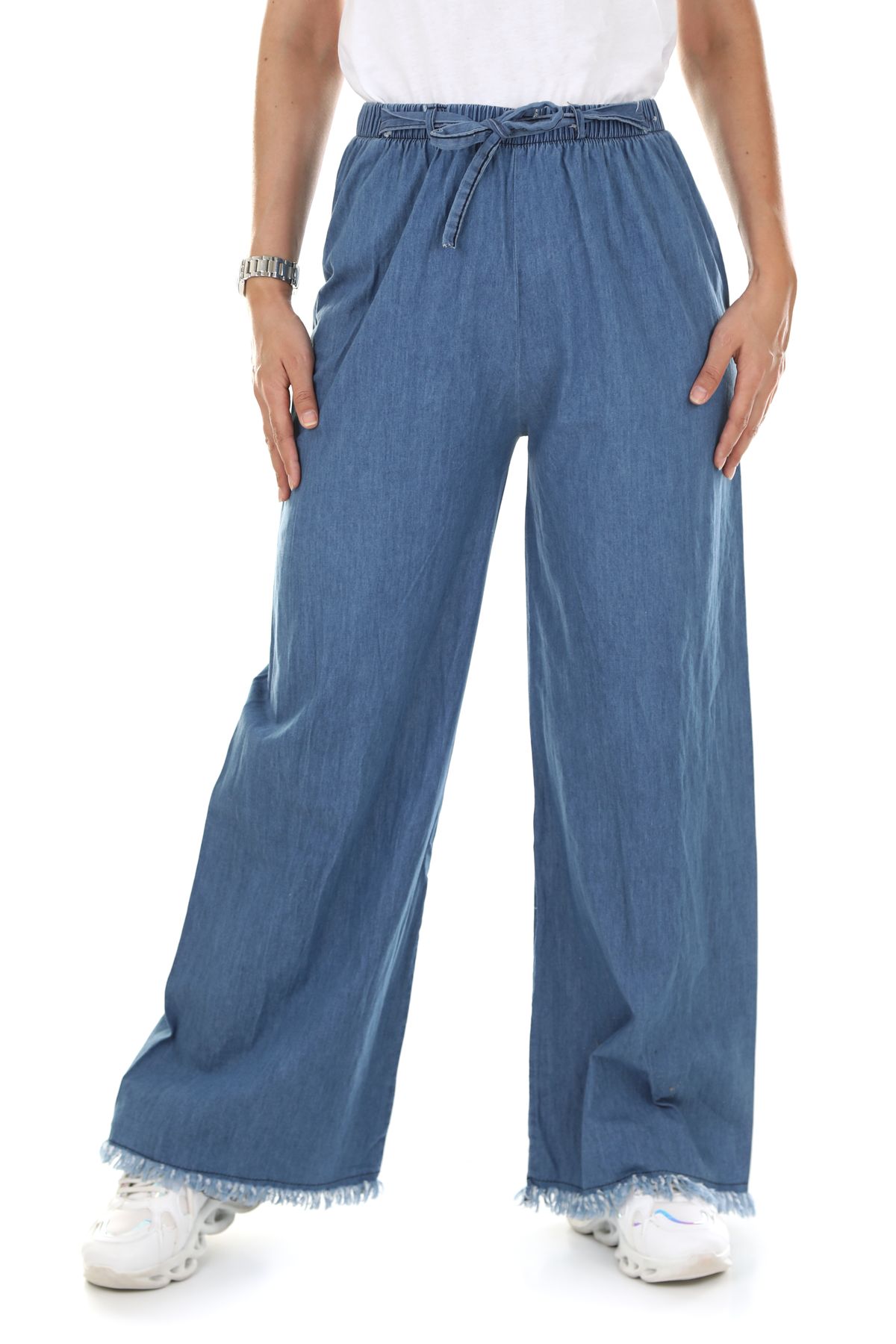
Check fabric and hem together
Soft chambray-like fabric falls differently from rigid denim. It can look fluid but may collect around the shoe. Rigid jeans hold a wider outline and often need a closer top. In both cases, the back hem should remain off the floor.
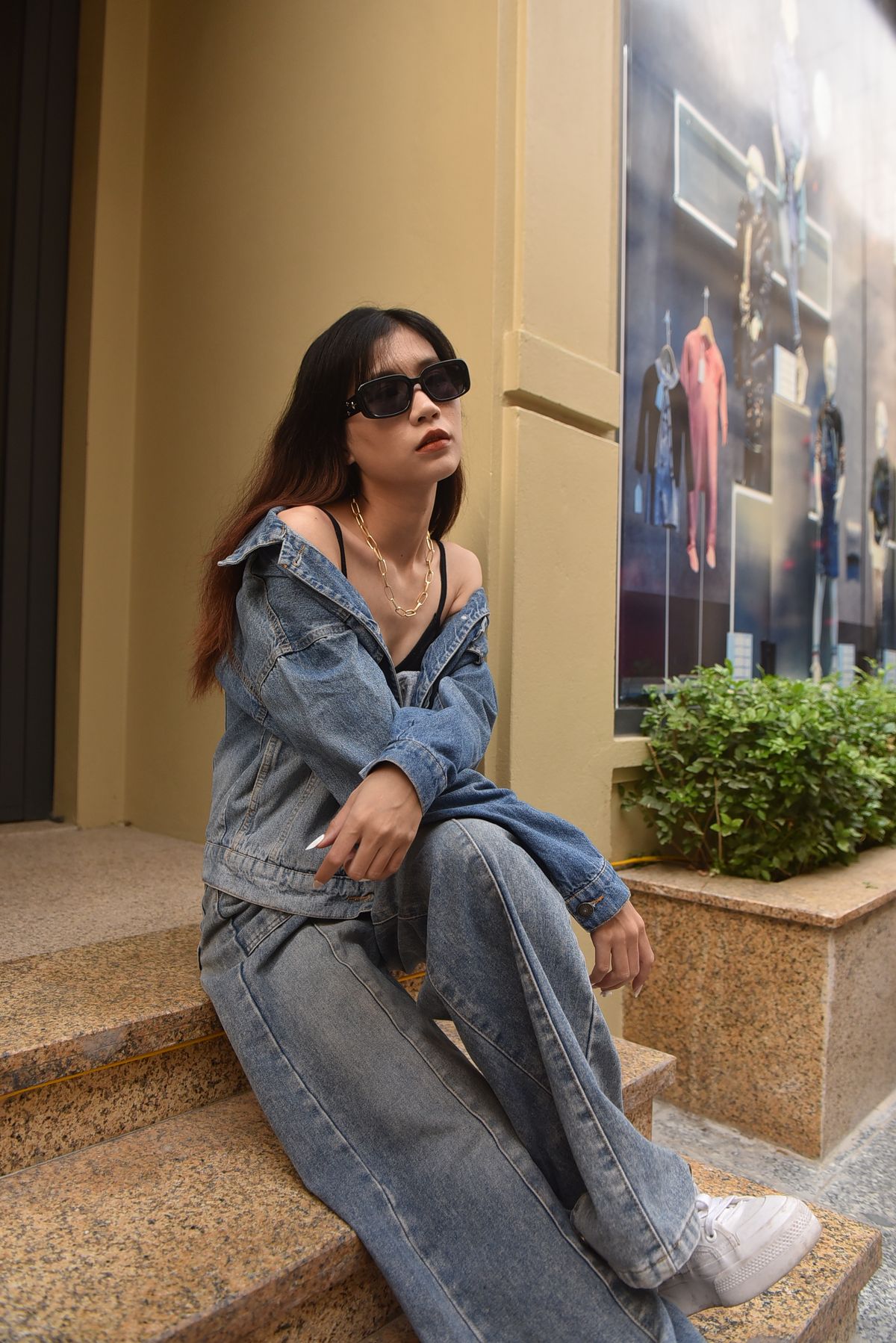
Double denim needs a break
The black camisole prevents the jacket and jeans from becoming one uninterrupted block. A belt, white T-shirt, or clearly different wash can do the same. Keep accessories simple because the denim already occupies most of the outfit.
Wide-leg jeans FAQ
Where should the hem fall?
It can skim the shoe or form one soft break, but should not sit beneath the sole.
Do we need a fitted top?
No. The upper half simply needs a readable edge, waist, or layer boundary.
Read the side view as well as the front
From the side, Check whether the waistband tilts, the pocket bags flare, or the denim collapses behind the knee. Those issues can make wide jeans look shapeless even when the front view seems balanced. A cleaner fit at the waist and upper hip lets the leg widen on purpose. If tailoring is needed, pin the waist and hem while wearing the intended shoes so the altered line remains consistent.
Choose where the wide leg begins
A jean that widens from the hip creates a different silhouette from one fitted through the thigh and flared below. I compare both from the side and check whether the fabric falls cleanly from the seat. Extra volume should look intentional rather than coming from an oversized waist or twisted side seam.
Set the hem with the everyday shoe
The front of the shoe should remain visible and the rear hem should clear the ground. I tailor for the shoe height worn most often and accept that extreme alternatives may need another pair of jeans. A clean hem and stable waistband preserve shape more effectively than adding a belt or long jacket to disguise poor length.
Control the top without making it tight
A compact knit, tucked shirt, or open layer ending near the waist can reveal proportion. Loose tops still work when the sleeve, neckline, or front edge creates a boundary. I avoid stacking a long cardigan over a long shirt and full denim unless the vertical opening remains clear. Comfort and visible structure can coexist.
Inspect the side seam after walking
A side seam that twists toward the front or back can make wide denim look uneven even when the front view seems acceptable. I walk, sit, and check the pocket openings before deciding on alterations. If the waistband fits but the leg collapses at one knee, the cut or fabric recovery may be wrong. Choosing another pair is often more effective than concealing the imbalance with a longer top.
Comments